I made it. I'm on the other side. And I want you to know — even from this hospital bed, even shaking, even with a walker — there is so much peace. There is so much gratitude. The Lord is good.
Five days out of brain surgery and I have tremors. I have a headache every time I cough. I've been on the same floor for five days. I can't get up and go the way I always have. But I want to be clear: this is not a hard post to write because things are bad. It's hard because I've never been this vulnerable in my life — needing help to get to the bathroom, needing help to walk, needing someone beside me going up and down the stairs. That's a different kind of hard for a guy who's never asked for help with anything. And it's teaching me something.
The Provider Becomes the Patient
I've always been the provider. Never the patient. Me and my dad are cut from the same cloth — always doing something, always building, never sitting still. And now I've been on the same floor for five days, watching my mom cut up my food, asking doctors to stand directly in front of me — not beside me — because I can't rotate my neck yet and I want to look them in the eyes when they talk. My dad always says communication is 7% words, 38% tone, 55% body language. I want the whole conversation. So I ask them to move, and they do.
These are the small things nobody warns you about in recovery. I didn't know what they felt like until now. And I'm a medic. I've stood on the other side of that bed more times than I can count. I thought I understood. I didn't. But I do now — and that perspective is going to make me better at everything I do going forward. That's not a loss. That's a gift.
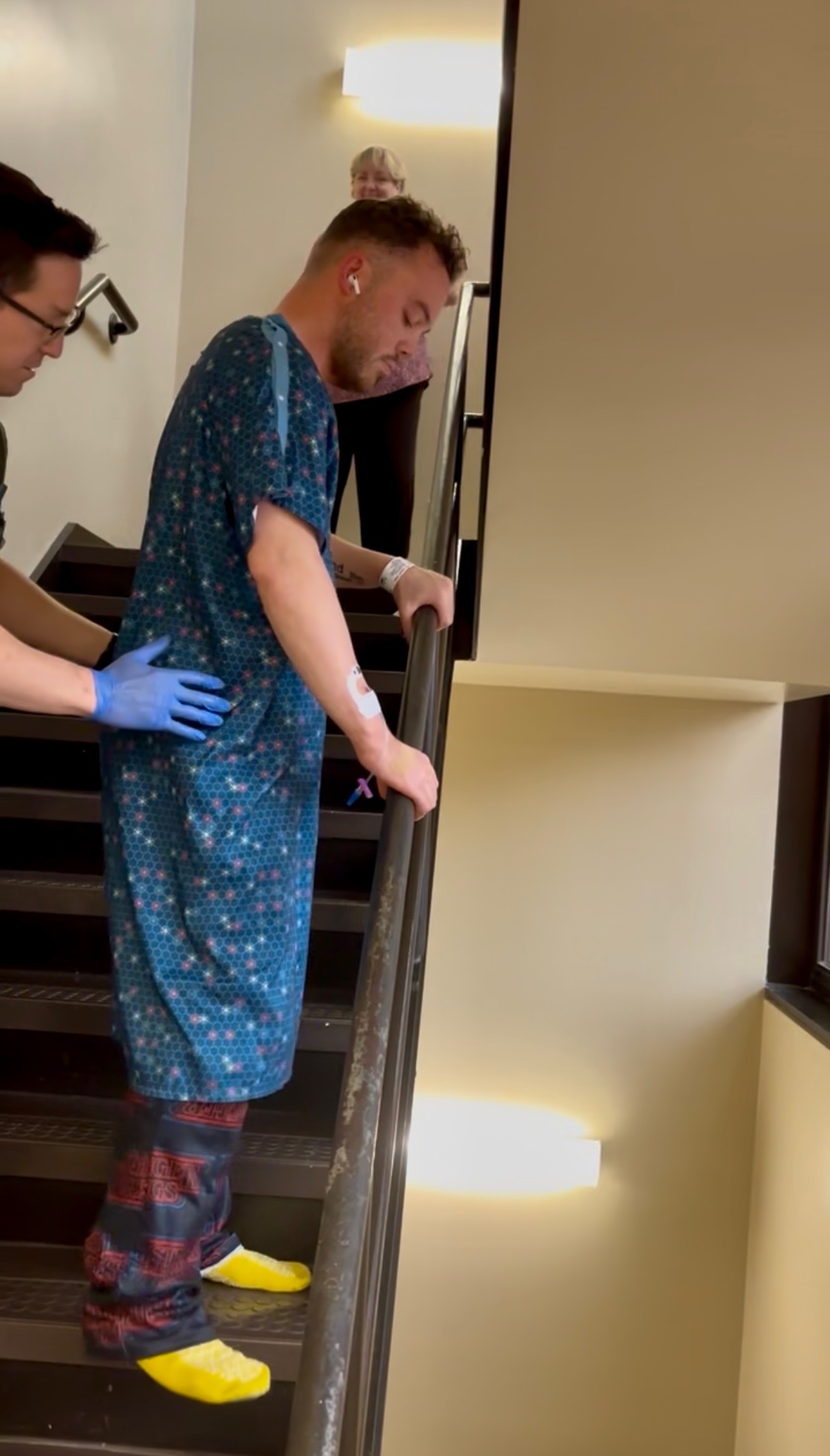
Needing someone beside me.
The Walker Is My Bench Press
I called an old buddy of mine — an old Marine. Old leather neck. He told me my walker is my bench press and I need to treat it as such. That's my workout right now. And you know what? I'll take it.
When he said that, it made me think of a man named Roy Benavidez.
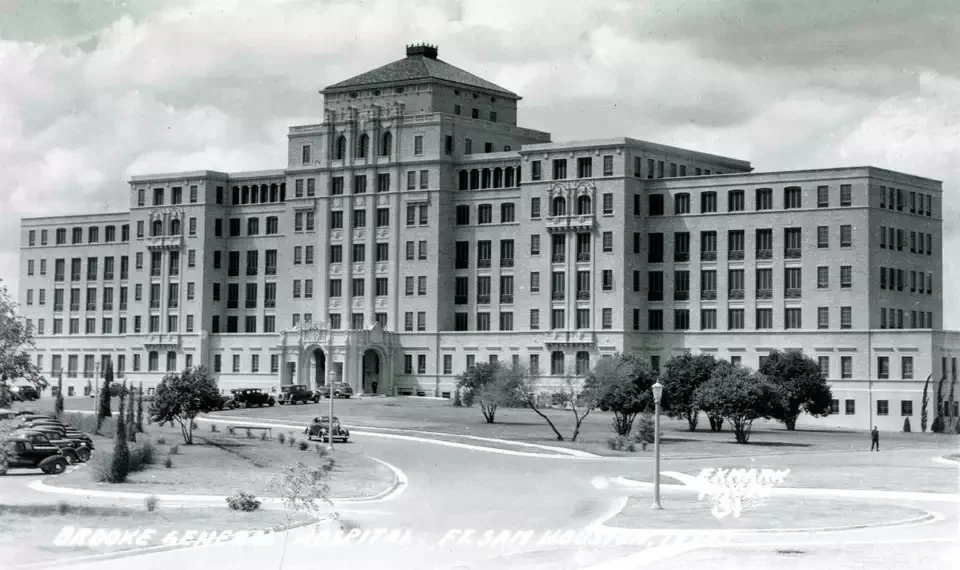
In 1965, Roy was deployed to Vietnam as a military advisor to the South Vietnamese Army. On patrol one day, he stepped on a landmine. He woke up at Clark Air Force Base in the Philippines. From there he was transferred to Brooke Army Medical Center at Fort Sam Houston in San Antonio — the same place I trained to become a medic. Doctors told him the damage to his spine was too severe. He would never walk again. They began preparing his medical discharge papers.
Roy Benavidez had other ideas.
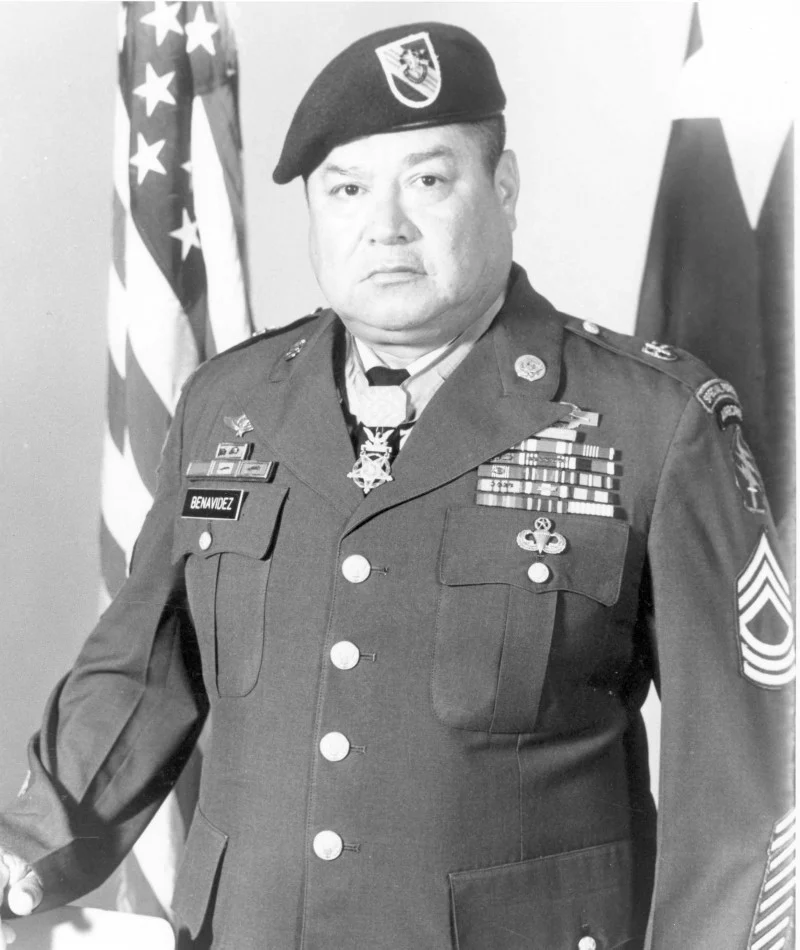
Medal of Honor Recipient
Every night, against doctor's orders — but with the quiet encouragement of the other soldiers in his ward, many of whom were amputees or permanently paralyzed — he crawled out of bed on his elbows and chin, dragged himself to the wall, and slowly began to redevelop his legs. He started by wiggling his toes. Then his feet. Then his ankles. Then pushing himself up the wall. It often left him in tears. He kept going. After more than a year of hospitalization, Roy Benavidez walked out of that hospital in July 1966 — with his wife at his side, on his own two feet.
Within six months of returning to duty, he could run ten miles with a rucksack. He completed Special Forces selection in 1967. He went back to Vietnam.
On May 2, 1968, he was at a forward operating base in Loc Ninh when he heard a panicked call over the radio. A 12-man Special Forces team had been surrounded by an entire North Vietnamese infantry battalion. Nobody ordered him to go. He voluntarily boarded a helicopter, jumped out into a clearing, and ran under heavy fire toward the surrounded team. He was shot in the leg, the face, and the head before he even reached them. He kept moving. For six hours he fought, carried and dragged wounded men, retrieved classified documents from a dead team leader, and survived being shot multiple times, stabbed with a bayonet, and hit by grenade fragments. He refused to leave until every man was accounted for. He was the last one on the helicopter.
When they landed back at base, medics placed him in a body bag. They believed he was dead. A doctor came to confirm it — and was about to zip the bag closed when Roy Benavidez spit in his face. That's how they knew he was alive. He had 37 separate wounds from bullets, bayonets, and shrapnel.
On February 24, 1981, President Reagan presented him with the Medal of Honor. Standing in front of the press, Reagan said: "If the story of his heroism were a movie script, you would not believe it."
Roy Benavidez trained to walk again at the same hospital where I trained to be a medic. His walker was his bench press long before my buddy ever said those words to me. I think about that every time I take a step down this hallway.
I don't have control over my muscles recovering instantly. But I have control over showing up to the work in front of me, every single day. And that's something I know how to do.
I don't know exactly when I'll walk a full mile again. I don't know when I'll run. But I know I will. The Lord's timing has never once been wrong — so I'm not going to pretend I've got the schedule figured out better than He does.
And when I start to doubt that — when the walker feels like a sentence instead of a starting line — I think about Roy Benavidez.
What's Next — And It's Good News
Here's an update I'm genuinely excited to share: we're traveling home to St. Louis today. The team here at Vanderbilt has done everything they needed to do. Surgery was a success. Recovery is moving in the right direction.
From there, I'll be doing outpatient rehab — working my way back, one day at a time, close
Share your thoughts